Monday, August 26, 2013
Frosty Frosty Frosty
Here we were a week or so ago, thinking we had had a very mild winter with only a couple of very mild frosts, when suddenly last week, we copped three consecutive mornings of rather severe frosts, or at least the most severe that we had experienced in our five years here at Larnook. When we moved in, there had been a very severe, 'black' frost the year before that had killed off large parts of our mango trees, which are situated right on the crest of the slope that our house is on, and these frosts weren't as bad as that one, but still quite heavy.
I had thought that we hadn't suffered much in the way of frost bite on our plants until I noticed today that many of the leaves on our two blue quandongs, that we planted down near our creeks, had died. Lets hope the trees survive.
I'm hoping the last of the frosts is over for this year.
Aborted camping trip to Bald Rock
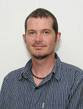
Meet Dario, our HelpXer from Madrid, who stayed with us for a bit over a week earlier in August. Dario is studying plant biology and was a study abroad student in New Zealand before coming to Australia for a few months, before flying home. Because he was so keen on all things nature, I decided we would go camping out at Bald Rock National Park, about a three hour drive from our place, north of Tenterfield. By the time we arrived at the camp site, in the mid-afternoon, the sky had grown cloudy, but no rain was predicted for the entire week, so I was relaxed. We pitched the tent and I introduced Dario to Australian-style confectionary (a lamington) before we set off on the 90 minute return walk to the summit of Bald Rock. Memo to self: never leave the tent flap open, no matter what.
About 15 minutes into the walk we felt a few spots of rain, which increased to a light shower. We both decided we should go back and wait out the rain, and so we turned around and started walking back, but within a matter of metres the rain had stopped, so we both scolded ourselves for being sissy nancy boys, turned around again and continued our trek. The sky had turned into an ominous inky black colour and the stillness of the bush was punctuated brutally every so often with loud claps of thunder. Memo to self: when the sky turns dark and thunder claps, turn back. But, once we approached the summit and the form of Bald Rock was evident, Dario was captured by its intense beauty, as all I have taken here, have. It's just a shame about the hail storm that followed the taking of this pic.
Once on the summit itself, we stopped to grab this selfie. Shortly afterwards the clouds could no longer hold on, and rain bucketed down on us, drenching us to the bone as they say. Memo to self: always take a change of clothes, even if you are only intending to camp for one night.
So this is what the sky looked like as the rain poured down on us. The rain had nowhere to go of course but flow down the granite face of Bald Rock, making the descent down the rock face a tad more difficult. The rain eased off after about ten minutes, but ten minutes is more then enough to be drenched. We made our way back to the camping ground, and, because I'm a glass half full kinda guy, I was still hoping/thinking that the tent would have remained dry, if the rain had come from the opposite direction to the tent opening. I was wrong. The tent, our sleeping bags, the mattress, everything was drenched. Although Dario stoically suggested we could sleep in the car, he changed his mind when I pointed out that it could get to zero overnight and we were wearing wet clothes. I felt rather stupid as we packed up the wet tent and gear, piled it in the car, and made our way home, three hours ago. Memo to self: Don't be bloody stupid.
The highlight on the return journey was this rufous bettong (or rat kangaroo) which remained in our headlights in the middle of the road for a minute or so, allowing Dario a nice view of this uncommonly seen marsupial.
Saturday, August 3, 2013
Lovely Larnook weekend
After my gallavanting in the Top End last week, it was very nice to have a weekend here at Larnook, which I spent, in part, by beginning to get the place looking at its best for spring. I started this process by mowing the lower paddock yesterday and then mowing around the house today. Roger busted a special springie-thing just as I was finishing the mowing around the house so he won't be doing anything until we get that replaced. Beautiful late winter (really early spring) weather here, completely sunny days, low 20s temps. Very nice.
Steve has, of course, been totally occupied by his costumes...he took last week off on long service leave and has added another three days this week....he literally works 12-15 hour days, breaking only for lunch and dinner. I am heading to Newcastle at the end of the week to go to the Uni of Newcastle's bookfair on Saturday, so I'll pile the car with another load of costumes and take these down for him. He will still be working on them for another two weeks so not sure how he proposes to get the rest down.
Julia (and Bluey) and Glen came over for drinks in the spa, dinner and a movie/sleep over last night, which was lots of relaxed fun. I did my Thai beef salad and Sara Lee herself provided desert.
And today I liberated my three western blue tongues into their section of the Lizard Palace. We are going to have a stretch of mild, sunny weather so I figured they can make the transition to their final living quarters sooner rather than later. I'm anticipating moving the four Tasmanian blotched blue tongues into the remaining section of Lizard Palace by October. By that stage they will be more than 20cm long so they'll be able to cope with the larger enclosure by then.
Steve has, of course, been totally occupied by his costumes...he took last week off on long service leave and has added another three days this week....he literally works 12-15 hour days, breaking only for lunch and dinner. I am heading to Newcastle at the end of the week to go to the Uni of Newcastle's bookfair on Saturday, so I'll pile the car with another load of costumes and take these down for him. He will still be working on them for another two weeks so not sure how he proposes to get the rest down.
Julia (and Bluey) and Glen came over for drinks in the spa, dinner and a movie/sleep over last night, which was lots of relaxed fun. I did my Thai beef salad and Sara Lee herself provided desert.
And today I liberated my three western blue tongues into their section of the Lizard Palace. We are going to have a stretch of mild, sunny weather so I figured they can make the transition to their final living quarters sooner rather than later. I'm anticipating moving the four Tasmanian blotched blue tongues into the remaining section of Lizard Palace by October. By that stage they will be more than 20cm long so they'll be able to cope with the larger enclosure by then.
Monday, July 29, 2013
Thinking about my Top End Trip
This time last week, instead of wearing tracky dacks and a sloppy joe, sitting here at the computer in my study, I was enjoying a mid-day nap in my 'bush bungalow' set in the lush tropical gardens at LakeView Park, Jabiru, before I drove out later that afternoon to climb Nourlangie Rock to watch the sun set. What a difference a week makes, hey?
I'm glad to be home, with Steve, of course, settling back into the reassuring predictability of the routines of life here at Larnook, but the week I had in the Top End, was a bit of magic. That I needed.
So, I've stuck together a few of the photos I took that help me tell my Top End story. Hope you enjoy.
Colour. Vibrant, super-saturated colours of the Top End landscape, this particular part of it being some cascades in a stream on the western edge of Litchfield National Park. Skies of deep, endless blue; reds, yellows and oranges of the earth and rock; the greens of the trees and shrubs and grasses; the greens and blues of the rivers and creeks and waterholes. A landscape of primary colours that loudly declares the tropics. While I was drinking in the colours of a billabong at the foothills of a rocky escarpment I was transported back to my childhood watching In the Wild with Harry Butler on my grandparents' colour television. I had forgotten that part of the absolute magic of that program were the colours so bright and vivid on the television set. Astonishing greens and blues and oranges of landscapes out of which Harry pulled brown tree snakes, crocodiles and frilled lizards.
Colour. Rich and intense again. But more than colour. Sunset over the infinity edge of the Timor Sea, taken from East Point Reserve, site of army camps during WWII. As an introvert with introspective tendencies, I am drawn to sunsets, happy to sit in quiet contemplation and watch the sinking sun as it soaks the horizon with gold and red and orange. Sunsets are great to think with.
Shutting down one day but with the promise of another to come. I came to the Top End in part because I wanted to feel small in a vast landscape and watching so many spectacular sunsets or climbing to the top of an escarpment and looking out over miles of woodland, allowed me feel tiny in space and time.
My 'companion' on parts of my trip was Eric Worrell, Australia's first 's nake man' and the subject of the book, Snake Bitten, that my colleague Nancy Cushing, and I, wrote a few years ago. Worrell spent a bit of time up in the Northern Territory in the 1940s/early 50s and I had trodden in his footsteps on my last trip here, visiting the paces that he had written about in his book Song of the Snake: war-torn Darwin, Alligator River, Katherine and Mataranka. This time my steps weren't so deliberate, but Worrell was never all that far away. He had watched the sunsets from East Point many times when he had been stationed there in the war:
"When the glowing sun sinks beneath the shimmering sea and the tropic moon hangs high in the heavens, Darwin teams with night life. The squeaking bark of tiny geckos as they gorge upon the myriads of tiny insects vibrates through the rafters; pandanus and carpet snakes glide through the twisted vines and creepers."
Crocodiles had a far greater presence than I can remember on my previous trip to the Territory, which was about six years ago. I can remember seeing a few but not as many as this trip. I had decided that I needed to go on one of the 'jumping croc' boat tours' as I will be writing about reptiles in tourism shortly, and I wanted to see for myself what these trips were all about. I chose a tour (of the three that are currently operating on the Adelaide River about 50 minutes to the east of Darwin) which advertised itself as 'jumping croc and wildlife tour' thinking that it might be a more ecologically sensitive version. I'm not sure that it was, but it was definitely a crowd-pleaser. No sooner than the 20 or so of us made our way into the aluminium boat (with what I, and my fellow cruisers thought had rather minimal security to protect against the antics of large, hungry,
habituated crocs) than this very big animal, named Terminator, slowly and very deliberately torpedoed its way from the middle of the Adelaide River to the boat. It really was a thrilling moment and one that I would want to experience only from the relative safety of a boat. The croc was around five metres long and seeing it so close was a real rush.
I'm still undecided about the ethics of the cruise - crocs do naturally jump out of water to grab birds and bats from low hanging branches, but they must surely become habituated and lose any fear (if they held any) of boats. More worringly is that they begin to associate boats with food. I would definitely not cruise up this stretch of river in a little dinghy!
The fellow who was the boat operator and guide - very friendly in a Territorian way - knew very little about croc biology or ecology - this tour made no pretences at being educational. He knew how to thrill his audience though, and judging from the reviews on TripAdvisor, the punters are all very happy.
As I said, crocs had a presence throughout the trip, whether watching them in captivity biting ineffectually at the 'Cage of Death' lowered into the pools at Crocosaurus Cove in one of the main streets in Darwin city or seeing them cruising the rivers and billabongs in Kakadu, or eyeing off the locals standing by the edge of the East Alligator River at Cahill's Crossing over to Arnhem Land. There is something different about knowing that you are walking along riverbanks or around the edge of waterholes and billabongs with an animal that regards you as a light lunch. Sure, the bush around here has its potential dangers - highly venomous snakes, poisonous plants - but they use their toxins for protection. The crocs are apex predators and who knows, I may well have been 'stalked' by an unseen crocodile as I walked - carefully I might add - along rivers and billabongs. Seeing these signs reminded me that I had to be careful and mindful of the potential threat that these animals posed for me.
I was quietly fascinated by the rock art left by Aboriginal people over thousands of years on rock faces, caves and under rock overhangs. I took many photos and I wondered at the stories and symbolism that each represented and of the individuals who actually painted them. This image of the thylacine or Tasmanian Tiger, left a big impression on me. The extinction of this animal is one of Australia's greatest ecological tragedies. How can such a marvellous animal, so unique, so distinctive, so dog-like, be killed to extinction in a matter of a few decades. People kept them as pets, for god's sake. These animals and the Tasmanian devil ranged over much of the mainland prior to the arrival of dingos about 4000 years ago. The prevailing wisdom is that the dingo out competed with the devil and the tiger leading to their extinctions on the mainland, their only refuge being Tasmania, where the dingo didn't get to. But I wonder, given the parlous state the devil is now in with the facial tumour disease, that the dingo hypothesis might just be too simple, and that perhaps something else, like a disease, might have played a part in their demise.
I was moved by seeing the likeness of this amazing animal, surviving here only as an image rendered in ochre, surveying the floodplain under Ubirr, looking for food with its enduring, relentless, but ineffectual, gaze.
There were of course some moments of disappointment - I didn't like the first place I stayed at in Kakadu, which seemed to be filled with men in their 20s who were staying there for the fishing and who filled up the space of the restaurant with their loud noise (read 'yobbos'), and a couple of mornings were a bit windier than I like, but these are so minor in comparison with the intense pleasures of the trip. I am continually amazed at how much more clarity of thought I have when I am temporarily liberated from the everyday life of work and home and I enjoyed some moments of great inspiration - some of which I have already translated into completed or near completed projects since arriving home at Larnook.
I sat in this rock hole below the Florence Falls in Litchfield National Park, cooling off, looking out into the cobalt blue of the sky, feeling the warmth of the sun and the cool of the water on my skin. And I felt that delicious feeling of freedom, no matter how fleeting it may be, which makes travel to places like this so special. I took my swimmers off and floated naked. I know that I am privileged that I have a life that allows me to experience such joy as this.
I'm glad to be home, with Steve, of course, settling back into the reassuring predictability of the routines of life here at Larnook, but the week I had in the Top End, was a bit of magic. That I needed.
So, I've stuck together a few of the photos I took that help me tell my Top End story. Hope you enjoy.
Colour. Vibrant, super-saturated colours of the Top End landscape, this particular part of it being some cascades in a stream on the western edge of Litchfield National Park. Skies of deep, endless blue; reds, yellows and oranges of the earth and rock; the greens of the trees and shrubs and grasses; the greens and blues of the rivers and creeks and waterholes. A landscape of primary colours that loudly declares the tropics. While I was drinking in the colours of a billabong at the foothills of a rocky escarpment I was transported back to my childhood watching In the Wild with Harry Butler on my grandparents' colour television. I had forgotten that part of the absolute magic of that program were the colours so bright and vivid on the television set. Astonishing greens and blues and oranges of landscapes out of which Harry pulled brown tree snakes, crocodiles and frilled lizards.
Colour. Rich and intense again. But more than colour. Sunset over the infinity edge of the Timor Sea, taken from East Point Reserve, site of army camps during WWII. As an introvert with introspective tendencies, I am drawn to sunsets, happy to sit in quiet contemplation and watch the sinking sun as it soaks the horizon with gold and red and orange. Sunsets are great to think with.
Shutting down one day but with the promise of another to come. I came to the Top End in part because I wanted to feel small in a vast landscape and watching so many spectacular sunsets or climbing to the top of an escarpment and looking out over miles of woodland, allowed me feel tiny in space and time.
My 'companion' on parts of my trip was Eric Worrell, Australia's first 's nake man' and the subject of the book, Snake Bitten, that my colleague Nancy Cushing, and I, wrote a few years ago. Worrell spent a bit of time up in the Northern Territory in the 1940s/early 50s and I had trodden in his footsteps on my last trip here, visiting the paces that he had written about in his book Song of the Snake: war-torn Darwin, Alligator River, Katherine and Mataranka. This time my steps weren't so deliberate, but Worrell was never all that far away. He had watched the sunsets from East Point many times when he had been stationed there in the war:
"When the glowing sun sinks beneath the shimmering sea and the tropic moon hangs high in the heavens, Darwin teams with night life. The squeaking bark of tiny geckos as they gorge upon the myriads of tiny insects vibrates through the rafters; pandanus and carpet snakes glide through the twisted vines and creepers."
Crocodiles had a far greater presence than I can remember on my previous trip to the Territory, which was about six years ago. I can remember seeing a few but not as many as this trip. I had decided that I needed to go on one of the 'jumping croc' boat tours' as I will be writing about reptiles in tourism shortly, and I wanted to see for myself what these trips were all about. I chose a tour (of the three that are currently operating on the Adelaide River about 50 minutes to the east of Darwin) which advertised itself as 'jumping croc and wildlife tour' thinking that it might be a more ecologically sensitive version. I'm not sure that it was, but it was definitely a crowd-pleaser. No sooner than the 20 or so of us made our way into the aluminium boat (with what I, and my fellow cruisers thought had rather minimal security to protect against the antics of large, hungry,
habituated crocs) than this very big animal, named Terminator, slowly and very deliberately torpedoed its way from the middle of the Adelaide River to the boat. It really was a thrilling moment and one that I would want to experience only from the relative safety of a boat. The croc was around five metres long and seeing it so close was a real rush.
I'm still undecided about the ethics of the cruise - crocs do naturally jump out of water to grab birds and bats from low hanging branches, but they must surely become habituated and lose any fear (if they held any) of boats. More worringly is that they begin to associate boats with food. I would definitely not cruise up this stretch of river in a little dinghy!
The fellow who was the boat operator and guide - very friendly in a Territorian way - knew very little about croc biology or ecology - this tour made no pretences at being educational. He knew how to thrill his audience though, and judging from the reviews on TripAdvisor, the punters are all very happy.
As I said, crocs had a presence throughout the trip, whether watching them in captivity biting ineffectually at the 'Cage of Death' lowered into the pools at Crocosaurus Cove in one of the main streets in Darwin city or seeing them cruising the rivers and billabongs in Kakadu, or eyeing off the locals standing by the edge of the East Alligator River at Cahill's Crossing over to Arnhem Land. There is something different about knowing that you are walking along riverbanks or around the edge of waterholes and billabongs with an animal that regards you as a light lunch. Sure, the bush around here has its potential dangers - highly venomous snakes, poisonous plants - but they use their toxins for protection. The crocs are apex predators and who knows, I may well have been 'stalked' by an unseen crocodile as I walked - carefully I might add - along rivers and billabongs. Seeing these signs reminded me that I had to be careful and mindful of the potential threat that these animals posed for me.
I was quietly fascinated by the rock art left by Aboriginal people over thousands of years on rock faces, caves and under rock overhangs. I took many photos and I wondered at the stories and symbolism that each represented and of the individuals who actually painted them. This image of the thylacine or Tasmanian Tiger, left a big impression on me. The extinction of this animal is one of Australia's greatest ecological tragedies. How can such a marvellous animal, so unique, so distinctive, so dog-like, be killed to extinction in a matter of a few decades. People kept them as pets, for god's sake. These animals and the Tasmanian devil ranged over much of the mainland prior to the arrival of dingos about 4000 years ago. The prevailing wisdom is that the dingo out competed with the devil and the tiger leading to their extinctions on the mainland, their only refuge being Tasmania, where the dingo didn't get to. But I wonder, given the parlous state the devil is now in with the facial tumour disease, that the dingo hypothesis might just be too simple, and that perhaps something else, like a disease, might have played a part in their demise.
I was moved by seeing the likeness of this amazing animal, surviving here only as an image rendered in ochre, surveying the floodplain under Ubirr, looking for food with its enduring, relentless, but ineffectual, gaze.
There were of course some moments of disappointment - I didn't like the first place I stayed at in Kakadu, which seemed to be filled with men in their 20s who were staying there for the fishing and who filled up the space of the restaurant with their loud noise (read 'yobbos'), and a couple of mornings were a bit windier than I like, but these are so minor in comparison with the intense pleasures of the trip. I am continually amazed at how much more clarity of thought I have when I am temporarily liberated from the everyday life of work and home and I enjoyed some moments of great inspiration - some of which I have already translated into completed or near completed projects since arriving home at Larnook.
I sat in this rock hole below the Florence Falls in Litchfield National Park, cooling off, looking out into the cobalt blue of the sky, feeling the warmth of the sun and the cool of the water on my skin. And I felt that delicious feeling of freedom, no matter how fleeting it may be, which makes travel to places like this so special. I took my swimmers off and floated naked. I know that I am privileged that I have a life that allows me to experience such joy as this.
Sunday, July 28, 2013
Mixed NT Pics#1
My week in Darwin, Kakadu and Litchfield national parks was perfect. This part of Australia is just so removed from my day to day understandings of what Australia is - in some ways it is another country. From the ancient rock art that adorns rock faces and overhangs in Kakadu to the black kites (a form of raptor like a small eagle) that fly over the city streets of Darwin or the saturated colours of the landscape of reds, greens and blues, it is a stunning place that you can easily lose yourself to.
Much of Kakadu is made up of this woodland savannah country. The little green car was my hire car - I don't think I've ever driven a green car before.
Billabongs and wetlands are also important habitats in Kakadu and I was visiting about the middle of the dry season so birds were starting to congregate in the more permanent billabongs, although the huge numbers won't start happening for another month or so. This billabong was in the shadow of Nourlangie Rock.
Some magpie geese which shared this billabong with green pygmy geese (such great little ducks), egrets, darters, plumed whistling ducks, to name a few...together with...
this crocodile. I was looking at a flock of whistling ducks and Burdekin ducks when I happened to notice this fellow sunning itself right next to them. This was really my first crocodile sighting outside of organised river cruises when it was just me and the croc. I was able to approach within 5 metres of it (on the landward side of course), but I thought that was sufficient proximity for both of us.
In Litchfield National Park is an area where two types of termite mounds occur - the magnetic termites which align their mounds on a north-south axis and another form which I have forgotten. Quite a surreal landscape is created from these mounds which are up to five or more metres high.
One of the stunning waterfalls in Litchfield National Park. Perfect swimming holes. So my trip was Darwin: 2 nights, left there on Sunday and travelled to Kakadu via Fogg Dam and Adelaide River croc cruise; Three nights in Kakadu, at three different places: Aurora Kakadu Hotel, which is on the Darwin end of the national park, then on to Aurora Kakadu Lodge in Jabiru, then LakeView Park at Kakadu; two full days exploring Kakadu, including Ubirr, Nourlangie Rock, East Alligator River, Yellow Waters; then on to Litchfield National Park, with the first night at Pandanus Caravan Park, Batchelor and my final night at Litchfield Safari Camp, and then back to Darwin, via Berry Springs and the Territory Wildlife Park. I want to go back soon!
Mixed NT pics#2
I visited a number of rock art sites - the first was at Ubirr, which is close to the East Alligator River. This is a beautiful long necked turtle.
While this is a thylacine. Thylacines, or Tasmanian Tigers, had a distribution across the mainland (as did Tasmanian devils) but both species became extinct on the mainland about 4000 years ago. The dingo, which arrived in Australia about then, is usually credited with their extinction, but I have to wonder if maybe disease also played a part. Anyway, I was very moved to see this rendering of this amazing animal,which now only exists as representations.
One of the striking aspects of travelling in the NT is the extraordinary intensity of the colours of the landscapes. The colours are just so vivid and vibrant. The sky is that deep cobalt blue, grasses and shrubs are often bright green.
And although there weren't a lot of things in flower, there were a few, such as this kurrajong.
The white of this ghost gum contrasts against the blues, greens and reds of the landscape.
Another amazing rock art site is at Nourlangie Rock, which is to the south of Jabiru.
While this is a thylacine. Thylacines, or Tasmanian Tigers, had a distribution across the mainland (as did Tasmanian devils) but both species became extinct on the mainland about 4000 years ago. The dingo, which arrived in Australia about then, is usually credited with their extinction, but I have to wonder if maybe disease also played a part. Anyway, I was very moved to see this rendering of this amazing animal,which now only exists as representations.
One of the striking aspects of travelling in the NT is the extraordinary intensity of the colours of the landscapes. The colours are just so vivid and vibrant. The sky is that deep cobalt blue, grasses and shrubs are often bright green.
And although there weren't a lot of things in flower, there were a few, such as this kurrajong.
The white of this ghost gum contrasts against the blues, greens and reds of the landscape.
Another amazing rock art site is at Nourlangie Rock, which is to the south of Jabiru.
Mixed NT Pics #3
This croc cruise on the Adelaide River was able to get rather close to some rather large crocs - this one was somewhere around 4-4.5 metres. We probably saw over a dozen crocs on that 90 minute cruise ranging from three very big fellas like this to some babies and everything in between.
For me, seeing my first mangrove monitor in the wild was a bigger thrill than the crocs, although seeing the big fellas so close was a rush, I have to say. I also saw a Merten's water monitor, later in my trip, but it was too fast getting away, so I didn't get a pic.
We saw a couple of these youngster crocs perched up in trees awaiting the return of the high tide to dislodge them.
Another river cruise, this one on the East Alligator River, owned and run by a local Aboriginal organisation, Guliyambali Cruises. Very good, cruised up and down a stretch of the river, again, finding a number of crocs at close range, as well as learning about the various uses that local people have made of trees and shrubs. We also landed on the other side of the river, Arnhem Land, and were able to spend about ten minutes here, admiring this beautiful billabong.
Our guide, Robert, demonstrating his considerable spear throwing skills into the East Alligator River.
Sunset over the floodplain wetlands below Ubirr Rock.
Subscribe to:
Posts (Atom)